
Market Commentary – September 2026
09/10/2026
Key Themes Driving Currency Markets
Warsh Pulls the Trigger
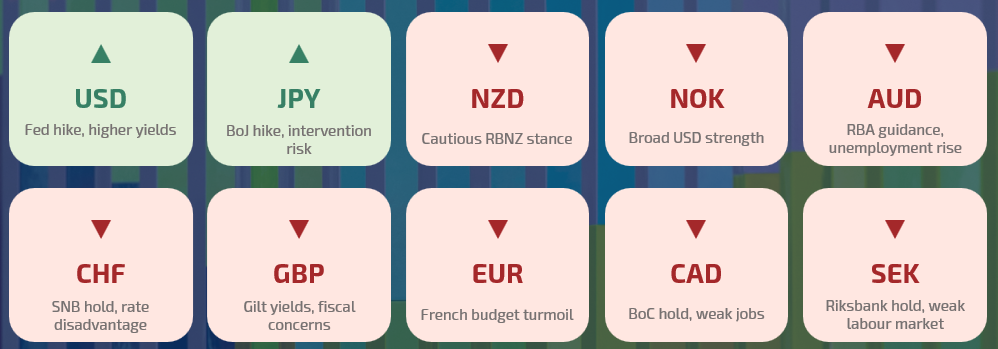
The dollar extended its rally in September as the Fed moved from hawkish rhetoric to action. August payrolls, released on 4 September, showed 162k jobs added, well above consensus, with prior months’ data revised higher. On the inflation front, August CPI rose 0.4% m/m on surging energy costs, providing the Fed with plenty of cover to hike. On 16 September, the FOMC unanimously raised the funds rate by 25bps to 3.75%-4.00%, its first hike since 2023, citing inflation that “remains elevated” and the need for a “timelier return” to target. The median dot for 2026 implied an additional hike before year-end, with the Fed holding rates steady through 2027. In his press conference, Chair Warsh reiterated the absence of forward guidance, describing the Committee as committed “to a discipline, not to a decision.” Treasuries sold off sharply, with the 10-year yield climbing to its highest level in nearly two decades. Softer-than-expected core PCE and NY Fed President Williams’ remark that there was “no need for urgency” to hike again in October trimmed some of the dollar’s gains into month-end, but USD still closed the month higher against every G10 currency barring the yen.
Hormuz Back in the Crosshairs
Hopes that the June US-Iran truce would restore normal energy flows faded further in September. US strikes on Iranian tankers and IRGC attacks on Gulf shipping in early September, as well as a Houthi strike on Saudi Aramco’s Jizan refinery, pushed Brent back towards $100, and prices jumped again on 28 September after President Trump rejected Iran’s offer to reopen the Strait of Hormuz in exchange for sanctions relief. Transits through the Strait remain a fraction of pre-war levels.
The renewed energy shock kept inflation front of mind for policymakers, with the RBNZ (2 September), ECB (10 September), Norges Bank and RBA (29 September) all raising rates. These moves were largely priced, however, and offered little protection against a dollar backed by the Fed’s own tightening and near two-decade highs in Treasury yields. NOK and AUD weakened despite higher oil prices and domestic rate hikes, while NZD was the worst performer in the G10 as markets read the RBNZ’s guidance as pointing to a slower path of hikes against a backdrop of faltering growth.
Holdouts Lag, Yen Bucks the Trend
Central banks that stayed on hold bore the brunt of dollar strength. The Riksbank held at 1.75% in late September, signalling hikes later in the year but contending with a weakening labour market, leaving SEK the weakest currency in Europe. The SNB kept its policy rate at 0% on 24 September and reiterated its willingness to intervene in FX markets, as the widening rate gap with hiking peers weighed on the franc. In the UK, the BoE held at 3.75% on 17 September in a 6-3 vote. Despite the hold, Sterling was comparatively more resilient than the euro as careful comments on the UK’s Autumn Budget from Prime Minister Burnham and Finance Chancellor Healey helped to temper rising gilt yields amid concern over the government’s thin fiscal headroom. French budget turmoil similarly added fiscal risk premium to the euro, but to a much greater degree.
The yen was the lone G10 currency to appreciate against the dollar. The BoJ raised its policy rate to 1.25% on 18 September in a 7-2 vote, and Finance Minister Katayama’s warnings, backed by rate checks and signals that Washington shares Tokyo’s concerns over yen weakness, kept intervention risk elevated and deterred fresh yen shorts.
N.B.: This summary includes market events and currency movements up to end-of-September.
Please click here for additional information, including risk disclosures.